Email Id :-
 Mobile: -



Certified Vs Notarized Vs Sworn Translation Ultimate Guide

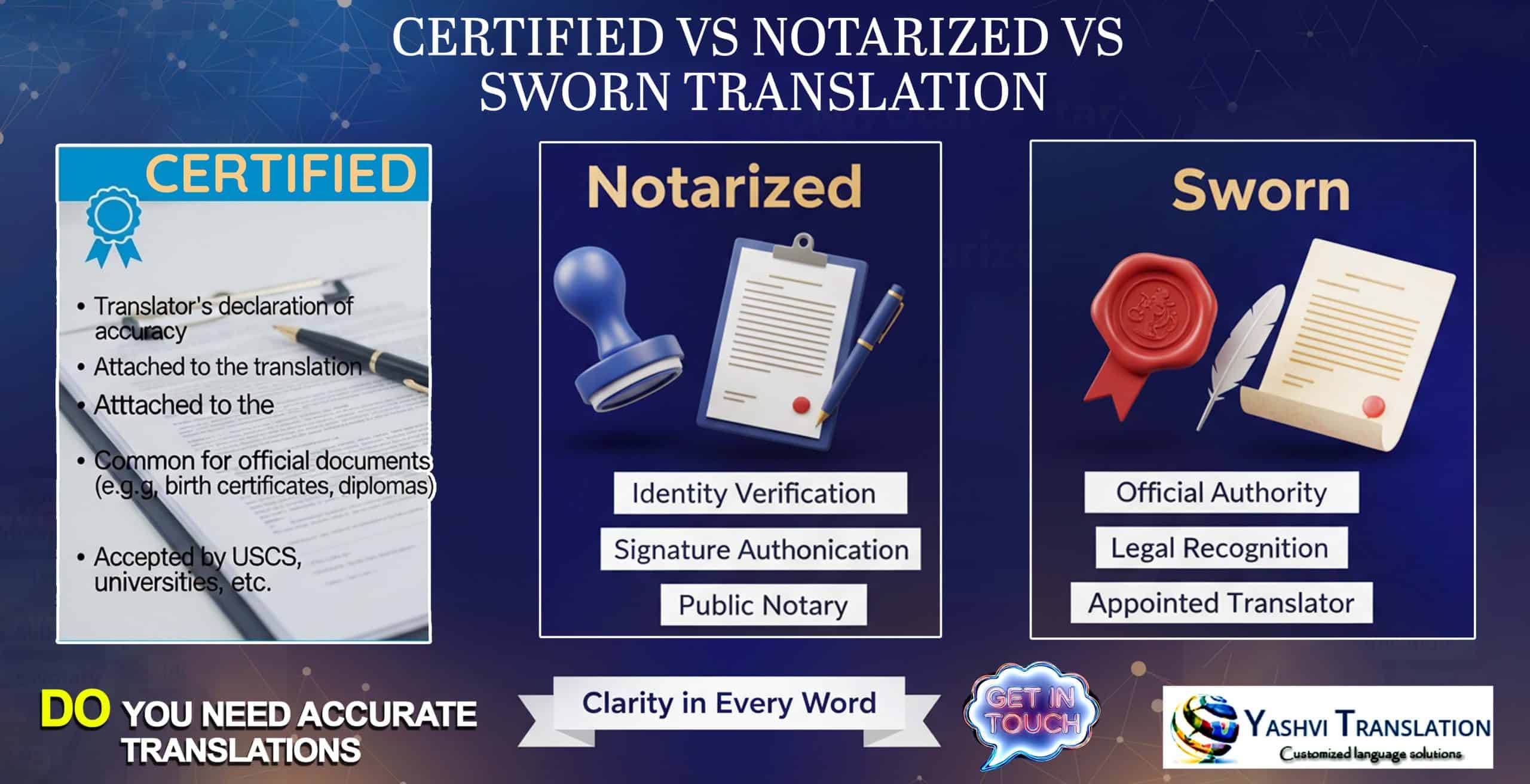
Notarized vs. Sworn Translation: The Ultimate Guide
Introduction
When you’re dealing with legal documents, immigration papers, or international business contracts, the terminology around translations can get very confusing. You may hear phrases like “certified translation”, “notarized translation”, or “sworn translation”, and wonder: What’s the difference? Which one do I need?
Making the wrong choice can cause delays, added cost, or even rejection of your documents. That’s why choosing a reliable certified translation service that understands official requirements is critical from the start.
In this guide you’ll learn exactly what each term means, how the services differ in practice, when you’re likely to need each one, and how to pick the right translation service for your case.
Here’s what the guide will cover:
- What is a certified translation?
- What is a notarized translation?
- What is a sworn translation?
- A side-by-side comparison of all three.
- How to choose the right service for your document submission.
- A special note on the Indian / South Asian context.
- Frequently asked questions.
- Academic transcripts, diplomas when submitting to a foreign university (for instance to the United States Citizenship and Immigration Services (USCIS) in the U.S.).
- Business contracts, immigration paperwork, documents submitted to government agencies in many countries.
- Translator promises accuracy of translation.
- Full translation of the original document.
- Translator signs and dates the certificate.
- Translator’s contact details or agency letterhead.
- The document packaging is such that the original + translation can be matched.
- Documents going to foreign countries, or legal proceedings where additional verification is desired.
- Legal contracts, property deeds, powers of attorney, adoption paperwork in some jurisdictions.
- Certified translation with translator’s statement.
- Translator signs in front of a notary or has signature verified by notary.
- Notary adds stamp/seal and date.
- The package often has translation + certificate + notary’s endorsement.
Because notarized translation adds a layer of authenticity, it tends to cost more and take slightly longer. - Documents to be filed with courts, notarial offices, foreign government agencies in countries that require sworn translations.
- Birth/marriage certificates, judicial decisions, property deeds when accepted only with the translator’s oath.
- Translator is officially authorised/sworn before a court or relevant authority.
- Translation includes translator’s oath, stamp/seal, registration number (in some countries).
- The translation may be registered/recorded with an official body.
By the end, you’ll feel confident about the terminology — and ready to brief your translation vendor or receiving authority with clarity.
What is a Certified Translation?
A certified translation is a translation performed by a professional translator (or translation agency) who attaches a certificate of accuracy or statement which says that the translation is a true and accurate representation of the original document. If you want to understand the difference between certified and notarized documents in practical terms, this certificate is the core element that defines certification. The certificate usually includes the translator’s name, signature, contact details, date of translation, perhaps their credentials or membership in a translator body.
Use-cases:
Checklist of features:
Because certified translation focuses primarily on accuracy rather than additional legal attestation, this is often the “minimum” level of translation many authorities require.
What is a Notarized Translation?
A notarized translation builds on the certified translation, by adding the involvement of a notary public (or equivalent) who verifies the identity of the translator and witnesses their signature on the certificate of accuracy.
This process is common for notarisation & embassy-ready translations, especially when documents are submitted internationally or used in legal contexts. Many applicants rely on professional providers such as translation services in Chennai or other major cities to handle both certification and notarization together.
Use-cases:
Checklist of features:
Key point to remember: Notarization does not guarantee the translation’s accuracy; it only guarantees the authentication of the signature.
What is a Sworn Translation?
Sworn translations (also known as “as sermentée”, “beeidigd”, “traductor jurado” etc in different jurisdictions) are translations performed by a translator who is officially authorised (sworn in) by a court, government agency or similar authority. They assume legal responsibility for the translation’s accuracy under an oath. In many civil-law countries (e.g., Italy, Germany, Spain) only sworn translators may produce translations that the courts or public authorities will accept as legally equivalent.
Use-cases:
Checklist of features:
Important caveat: In many English-language jurisdictions (USA, UK, Australia) the concept of “sworn translator” does not apply in the same way — certified translations suffice.
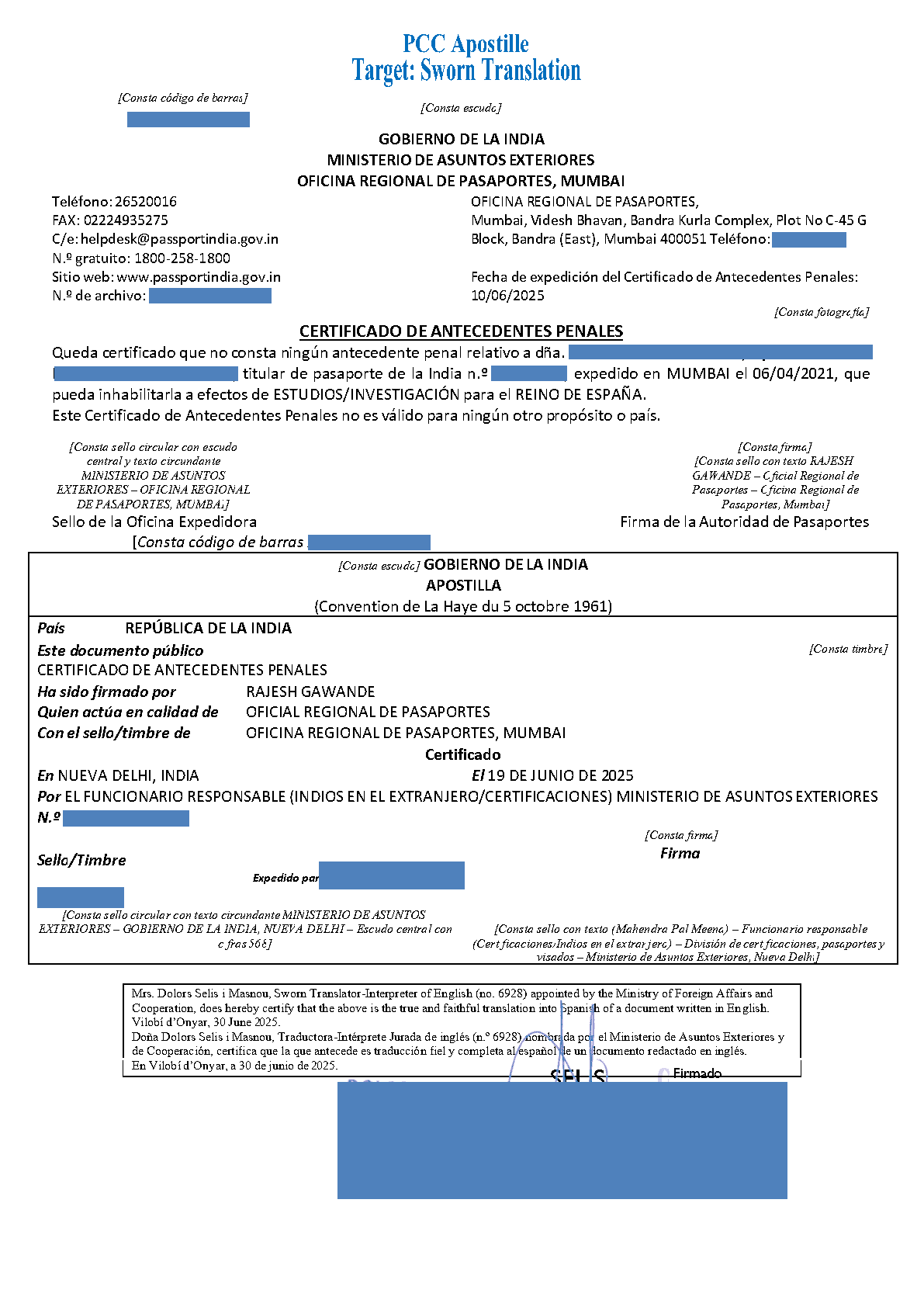
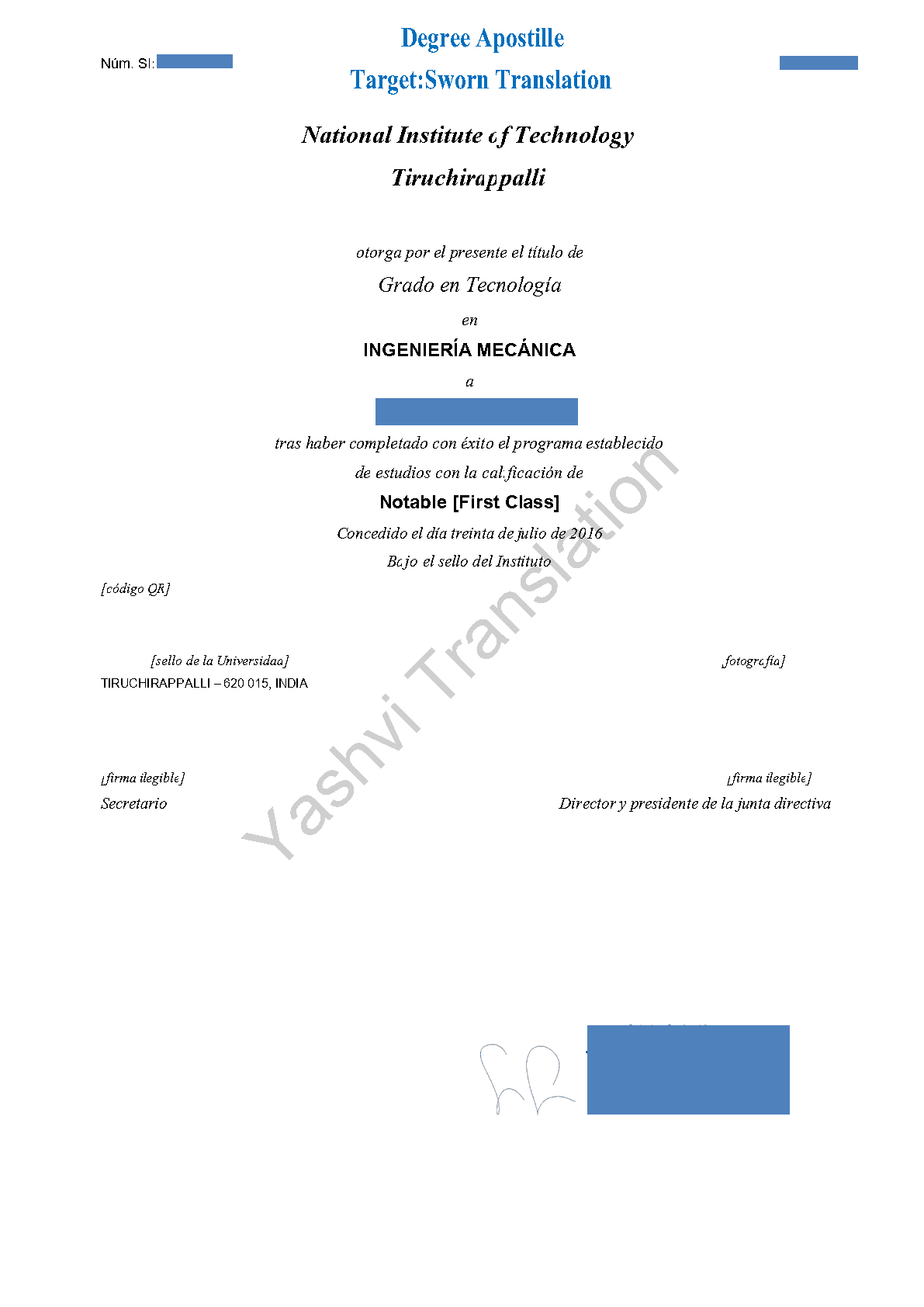
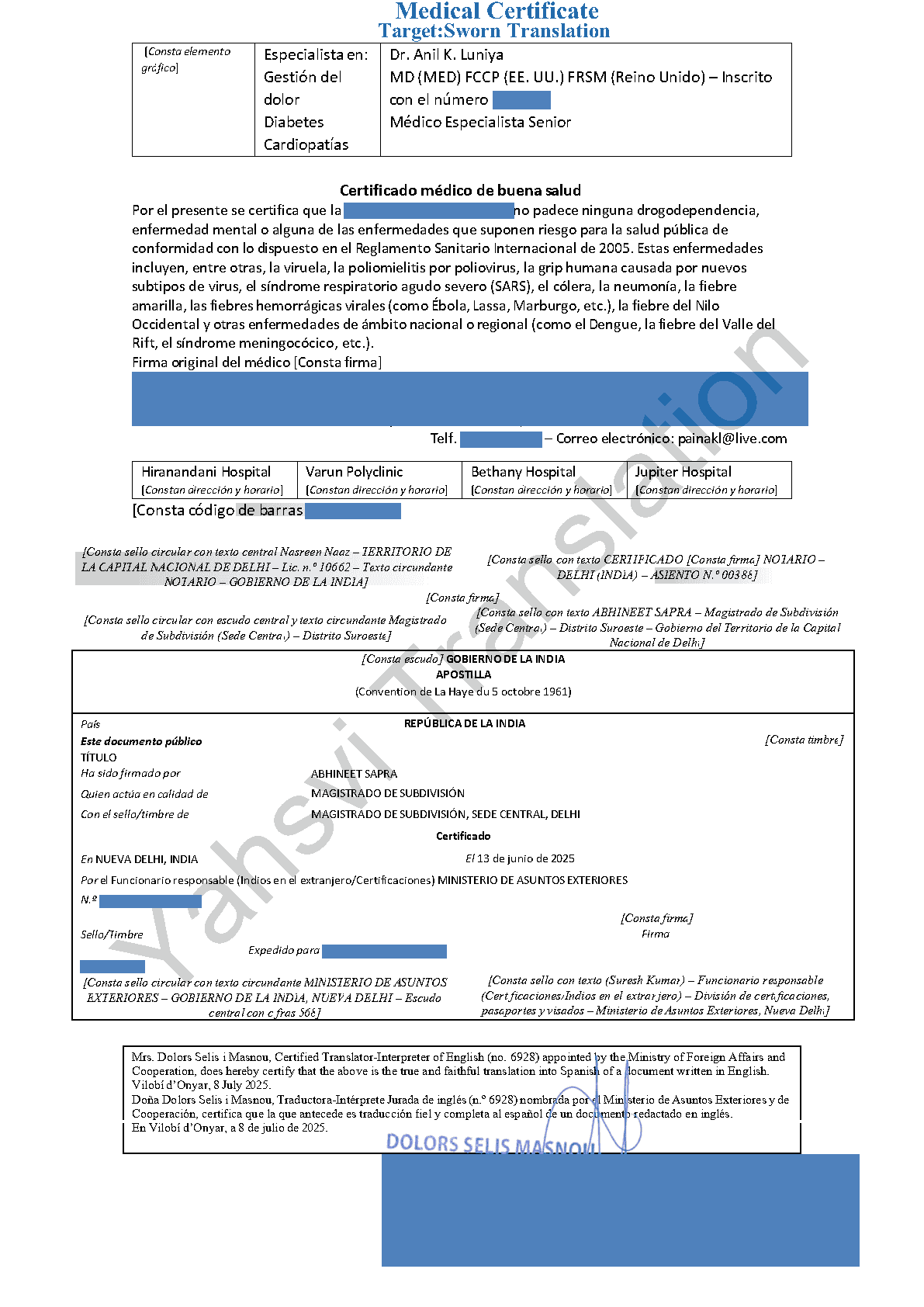
Side-by-Side Comparison: Certified vs Notarized vs Sworn
| Term | Who signs & verifies | What’s being certified/attested | Legal weight / where used | Typical use-cases |
| Certified | Translator (or translation agency) | Accuracy of translation | Accepted in many jurisdictions, but may not be legally “equivalent” | Immigration forms, academic transcripts |
| Notarized | Translator + Notary Public | Translation certificate + authentication of signature | Higher assurance; suitable for legal/official use in more cases | Property contracts, overseas submission |
| Sworn | Translator sworn before court/authority | Translation treated as legally equivalent original | Highest weight in jurisdictions that require it | Court filings abroad, government submissions abroad |
Example scenarios:
➡️ You’re submitting a diploma to a UK university: a certified translation will usually be enough.
➡️ You’re submitting a deed to a foreign consulate for property registration: you might need a notarized translation.
You’re submitting documents to a court in Spain where only a sworn translation is accepted: you’ll need a sworn translation.
Bottom line: Always check with the receiving authority which type they require — the label matters far less than the requirement.
[Your Full Google Reviews Link Here]


How to Choose the Right Service for Your Document
Here are the key questions to ask before you choose a translation provider:
- Where will the document be submitted?
Identify the country + the specific institution (university, government agency, court). Their requirements differ. - What term do they use?
Do they ask explicitly for “sworn translation”, or “certified translation”, or “notarized translation/affidavit”? - Do they require a specific translator credential?
Some countries require the translator to be registered or “sworn”. Some institutions accept any professional translator if the statement is present. - Does the translation need notarization?
If yes, ensure your vendor handles or coordinates the notarization step. - Does the original document need apostille or embassy/legalisation first?
In cross-border cases, translated documents may also require apostille/attestation apart from translation. - What format is required?
Hard-copy or digital? Does the translation need to be attached to the original? Do they want an affidavit or translator’s certificate? - Turn-around & cost
Notarized or especially sworn translations often cost more and take more time. For example, one Canadian-based agency quotes notarized translation from USD and India based agency in inr
Red flags / common mistakes:
➡️ You instruct “just a translation” when the receiving body needs “sworn translation” — you may face rejection.
➡️ The translator signs but the notary step is missing (when required) — again may cause delays.
➡️ The translation certificate is incomplete (missing translator’s name/contact/address) — some agencies reject such translations.
➡️ Relying only on “certified translation” when the jurisdiction specifically says “sworn translation required”.
Practical tip: Always contact the receiving authority (or check their document submission guide) and ask your translation vendor to confirm in writing that their work meets those requirements. Keep that written confirmation for your records.
Special Note: Indian / South Asian Context
Since we are based in India (or servicing clients here), here are some extra points to consider:
- In India, unlike some European jurisdictions, there is no uniform national “sworn translator” registry recognised by all courts/govts. So when you’re sending Indian documents overseas (or foreign docs into India), the key is: what does the receiving country ask for?
- For foreign use, Indian origin documents often need translation + certified declaration + apostille/attestation by the relevant state or central authority. Then the translation may need to comply with the host country’s demands.
- When selecting a translation vendor in India: ensure they provide the certificate of accuracy (for certified translation) or handle notarization (if required). Ask for sample certificate.
- Turn-around/time: Notarization may add logistic delays (meeting a notary public, travelling, etc). Similarly, shipping physical documents abroad may add cost/time.
- Cost guidance: Translation agencies in India may charge per word, per page, or flat fee depending on language pair and difficulty. Notarization will add extra cost (local notary fee, certificate handling).
- Example: You have a Dutch-language notarial document (like you mentioned you handled) and you need it translated into English for Indian use. You will need to check whether Indian authority requires the translator to sign affidavit, whether notarization is required, or whether mere certified translation suffices.
In short: the international component adds complexity — the correct type often depends on where the document will go and what that authority expects.
Conclusion
The most important takeaway is this: the correct translation type depends on the receiving authority’s requirement, not just the label you see on the translation vendor’s website.
- A certified translation is often enough for many official uses (especially in English-language jurisdictions).
- A notarized translation adds verification of the translator’s identity and signature.
- A sworn translation carries the highest legal weight in jurisdictions which demand state-authorised translators.
Because you are targeting users who are confused about the terminology — and because cost, time and acceptance are at stake — it’s crucial you check requirements ahead of time, pick a vendor who clearly states they will meet your needs, and keep documentation of compliance.
If you’re based in India (or serving clients in India), factor in the extra layer of international use / apostille / local registration.
Finally: If you already have documents ready and want professional guidance, you can request certified translation support and get clarity before submission.
Frequently Asked Questions (FAQ)
If uncertain, start with a certified translation (it covers many situations). But ask them specifically whether they require “sworn” or “notarized” translation before you proceed — you might save time and cost by doing it right the first time.
Yes — a translation can first be certified (translator attaches certificate of accuracy) and then notarized (signature witnessed by notary). That gives you “certified + notarized” status.
No, it does not. The notary only verifies the identity of the translator and witnesses signature, not the content or accuracy of the translation. Quality accuracy remains the translator’s responsibility.
Notarized or sworn translations tend to cost more than a plain certified translation because additional steps are involved (notary fees, legal procedures, possible official registration).
Usually not. Once done and certified/notarized/sworn, the translation remains valid unless the receiving authority demands a fresh version. Always check expiry/validity requirements of the destination country or institution.
You may face rejection of your document, requests for re-submission, extra cost and delay. In critical contexts (immigration, court, property transfer) this can be costly. So it pays to get it right the first time.
Recent Clients Review